


Hone in and home in are often mixed up. While home in means to get closer or focus on a target, hone in has become a colloquial variant of this phrase, even though hone traditionally means to sharpen. The use of hone in in the sense of focusing or zeroing in on something has become accepted in informal contexts, even if purists argue it’s not the original expression.
But it’s not just about these two terms. The mix-up is part of a larger phenomenon known as eggcorns. Eggcorns are words or phrases that are mistakenly used in place of similar-sounding words, and they can sometimes alter the original meaning. Understanding eggcorns enriches your vocabulary and hones—or should I say homes?—your skills in effective communication.
This guide goes deeper into their meanings and usage and helps you understand the difference with sentence examples. Let’s get home in!

Is It “Home in” or “Hone in”?
Home in is more acceptable and means to direct on a target. The phrasal verb derives from the 19th-century use of homing pigeons, but it resurged in the 20th century to refer to missiles that home in on their targets. It’s also commonly used metaphorically, where to home in on something is to focus on and make progress toward it.
How Do You Use “Hone in” and “Home in” Within a Sentence?
Home in
Bone cancer is sometimes treated with radioactive isotopes that home in on the bone. [NY Times]
But now the sharks were starting to home in on the large groups that had amassed during the past thirty-six hours. [In Harm’s Way, Doug Stanton]
But they do reveal Dahl’s uncanny ability to home in on the darker reaches of human ingenuity. [Financial Times]
Unlike some of his other films, though, which home in on the ways in which sex and violence overlap, La tarea analyses sexuality in a humorous context. [A Companion to Latin American Film, Stephen M. Hart]
Hone in
Burke advises students to hone in on departments in which they are comfortable and already feel close to professors. [Swarthmore Phoenix]
Other resources like HDTv Antenna Labs provide relatively easy ways to hone in on the right antenna. [Wired]
It’s not the first multinational to hone in on one of the largest vegetarian markets on earth. [Toronto Star]
What Is the Difference Between “Home in” or “Hone in”?
Home in and hone in are different since home in is to direct attention, while hone in is to perfect a skill. The two phrases seem the same because of how they are used in sentences.
A Closer Look at the Phrasal Verbs
For example, one can “home in” and “hone in” a campaign theme. But when you home in on a campaign theme, it means you are targeting a single campaign. And when you hone in on a campaign theme, it means you need to perfect or sharpen the campaign you already have.

The definition of hone is to sharpen an object or a skill. You can hone a blade, but you can also hone your negotiation skills or cooking skills.
Home means a shelter, so to home in is to approach a destination like heading home after a tiring day. It’s an original metaphor from homing pigeons, which became associated with missiles, aircraft, and other military concepts.
You can home in on a literal location, like with the previous discussion of homing pigeons and homing missiles. But you can also home in on a specific idea, like homing in on a sense of identity.
So, the main difference between hone in and home in lies in the definition of their first words. Some sentences can use both phrases, but the meaning won’t be the same.
When to Use “Home in” or “Hone in”
Using the common phrasal verb hone in was a mistake people make in writing. Merriam-Webster’s Dictionary, the most extensive dictionary, considered it an error by commentators. The American Heritage Dictionary also encourages “home in.”
The meaning of hone, a transitive verb, is to sharpen. Notice how a direct object always follows the word. You can hone a knife or a skill. But the phrase hone in is incorrect. Or at least it was.
However, hone in is now common in modern American and British English. Many English writings also use hone in already, although it’s less common in professional writing. This situation proves that language is fluid and dynamic.
Many language watchdogs are not open to the use of hone in. But it’s undeniable that we see the sands of language shifting.
Using Home as a Verb
Home is also a verb meaning to return to the place of origin or residence. While you can say, “My mom said we should go home,” the verb is frequently used for animals returning to their source.
These creatures have an animal-specific sense that allows them to go home. For example, their intense sense of smell helps them return when lost. The animal in question here is the dog.
Many people ask a common grammar question about using home in instead of home. We say home in to target something in reference to missiles homing instead of simply returning. Keep the metaphor in mind when trying to distinguish between the two.
Synonyms for “Hone in”
Other words or ways to say hone in can be used in writing to help mix up the narrative or dialogue. Here are some excellent examples you can use:
- Leveled
- Nailed
- Pointed
- Set
- Zeroed
- Fixated
How Different Countries Use “Home in” or “Hone in”
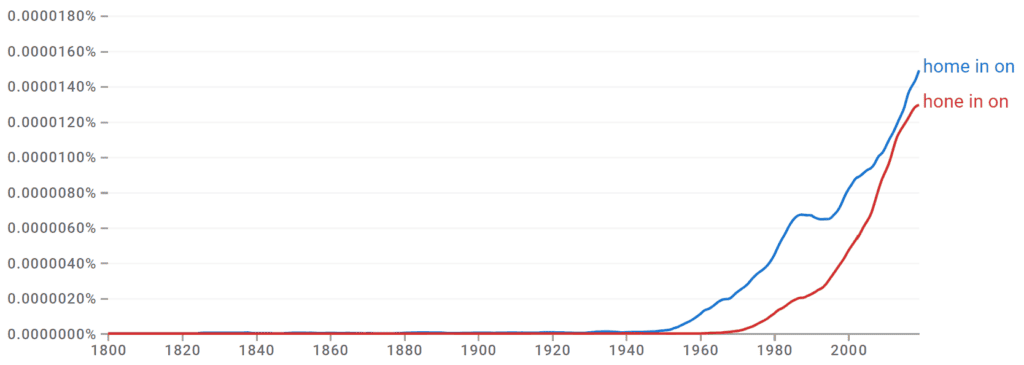
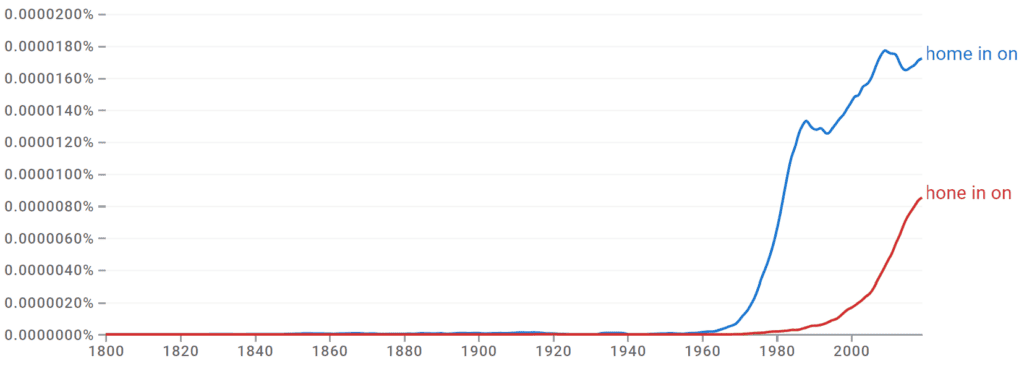
American English, Canadian English, British English, and Australian English use “home in on” more than “hone in on.” Both are commonly used phrases in all forms of English, just as they’re both acceptable. But few actually use the terms the way they’re meant to be used.
Final Words
So, there you have it. Whether speaking or writing, the key to remember is that if you’re perfecting something, use hone. If you’re zeroing in on something, use home. Did this guide help clarify everything for you? For more helpful writing tips, take a gander at our breakdown of other phrasal verbs like “work out.”