


English, as a language, often displays variations in spelling and usage across different regions. But understanding the difference between the words like “defence” and “defense” is super important if the regional spelling is critical to what you’re writing. So, let’s take a second to delve into their meaning and see how to use them in a sentence.
Meaning of Defense

The word defense or defence is used to describe the act of protecting yourself or others from harm. You can also utilize the word to describe the methods or tactics used to ensure protection, like military operations or legal arguments.
Also, the word “defense” can refer to a sports position or strategy aimed at preventing the opposing team from scoring.

- I punched him in self-defense.
- “Defense!” The coach yelled at the team, reminding them to defend the net.
Defence vs. Defense
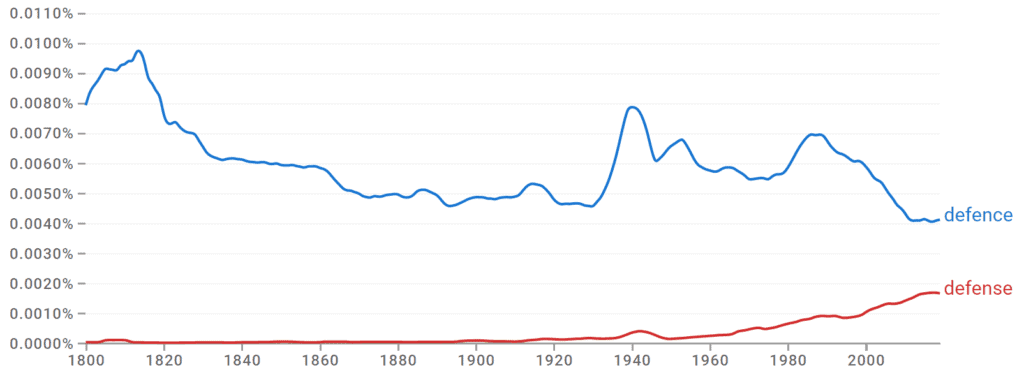
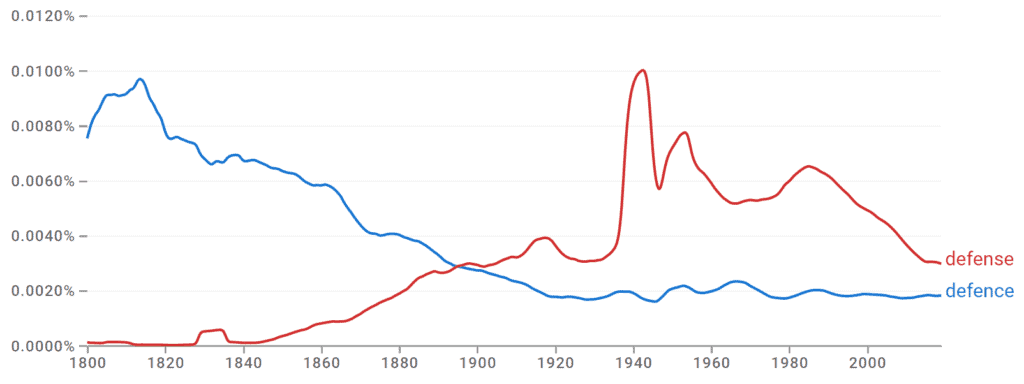
Their meaning is exactly the same. Like a lot of words with alternate spellings, it comes down to regions. In America, “defense” is used more often. In Canada, the UK, Australia and New Zealand, however, you’ll find that “defence” is more common.
How Do You Spell Defense?
- In the United States: d-e-f-e-n-s-e
- In all other English-speaking countries: d-e-f-e-n-c-e
And, regardless of the spelling, it’s pronounced as dee-fen-ss.
Defense as a Verb
“Defence” and “defense” are almost always a noun. However, you can use it as a verb when talking about sports and other things, but you have to modify it to be either defended, defend, defending, etc.
Synonyms for Defense
Here is a list of synonyms for “defense” or “defence” that you can use to switch up repetitiveness in your writing.
- Protection
- Guard
- Shield
- Safeguard
- Security
- Resistance
- Barrier
- Fortification
Defense and Defence Examples in a Sentence

Here are a few contexts to show you how to use the preferred spelling by region.
- The seasoned lawyer presented a strong defense in court to prove her client’s innocence. (American English)
- Our country’s military defence budget has increased this year.
- The soccer team’s defense was impenetrable, preventing the opposition from scoring. (American English)
- Don’t mind my sister; she’s always so defensive. That’s just her nature. (American spelling)
- The Scottish castle’s walls were built as a defence against invading forces back in the day.
- Before heading to another province for college, I learned self-defense techniques to protect myself in dangerous situations. (American English)
- The Canadian government’s policy on national defence has been a topic of debate for years.
- Don’t listen to her; it’s all a defense tactic to convince you to take her side. (American English)
Defense or Defence: Either Way Is Fine
So, to sum it up, you can use both “defense” and “defence” when writing because both are considered correct spellings and are accepted by all dictionaries. However, if you’re writing for a specific audience of, say, Americans or Canadians, then try and use the region preferences if you can. I always remember that “defence” with a C is Canadian, which also starts with the letter C. Hope that helps!
Enjoyed reading about spelling? Check out some others we covered:
Comments are closed.