Spelling

Threshold or threshhold

Threshhold is a common misspelling. The correct spelling is threshold with no double h. A threshold is a border between rooms that you walk over to change from one area to another. Another, more figurative, definition is that a threshold can be the moment when some quality or amount begins to change. This can be either a physical …
Read More

Riffle vs rifle

To riffle, pronounced with a short i sound, is to peruse something quickly, usually by flipping through the items. It can also be used for shuffling playing cards or flipping the pages of a book or stack of papers. Common synonyms are ruffle and shuffle. A riffle is anything that causes water to ripple, either …

Read More

Supersede or supercede

The official spelling is supersede. This verb means to replace or substitute something for something else. It is a transitive verb that is used with an object. Supersede comes from French, and then Latin before that. In both languages it is spelled with an s. However, the misspelling supercede has been recorded for multiple centuries. …

Read More

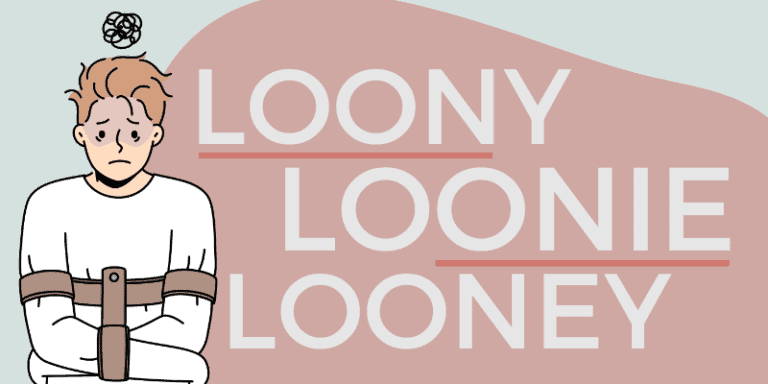
Loonie Loony or Looney Whats the Difference 2

Loonie, Loony, or Looney – What’s the Difference?

Although a loon is an actual bird, Gaviidae sp., the name has been borrowed multiple times as slang alternatives to provide various meanings to various things. Slang words are often derived from legitimate words to provide a connotative meaning related to their original use. Slang is usually specific to regional …

Read More

Frogmarch or frog-march

To frog-march is to make or require someone to move forward by shoving from behind. This verb is not just forcing the person to walk, but to do so roughly and with some violence. Some dictionaries go so far as to say the person being made to walk must have his or …

Read More

Crisis of conscience vs crisis of confidence

A crisis is something that is extremely tense with high stakes. A crisis demands immediate decisions and has serious consequences for the wrong decisions. The plural is crises, pronounced as /cry sees/. In medical terminology crisis has several definitions. It can be a turning point, either for better or for worse, or a severe physical or …

Read More

Copacetic or copasetic

Copacetic is an adjective used to describe something or someone as pleasing or meeting one’s expectations. It is generally a North American term. If it is used in other countries an explanation is usually given in the text. The term is generally seen as informal. It is not listed in the …

Read More

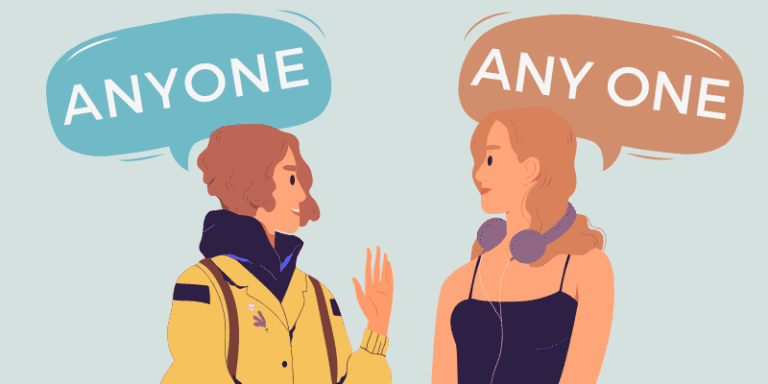
Anyone vs. Any One Usage Difference 2

Anyone vs. Any One – Usage & Difference

Is there a difference between “anyone” and “any one”? You might not think it because they look the same, sound the same, and have the same meaning. Oh, but wait! That’s where you’re wrong; they don’t have the same meaning and are used in different contexts. I’ll explain the key …

Read More

Anymore or any more

Anymore is an adverb that means a general amount of time, usually the present or near past. Usually it is used to say if an action or event still happens or exists. This construction is the preferred in the US, while outside the country the standard is to keep the two …

Read More

Anyday vs any day

Any day is the more preferred when talking about a general time frame. Usually the term is used to describe something that is happening soon, as in the next couple of days, or any day. This is such an informal term that most dictionaries don’t list it as an actual term on its …

Read More