


What makes English so interesting is the many foreign words that have influenced the language. Colorful expressions directly borrowed and adapted from other countries are threaded throughout Americans’ speech and writing, creating descriptive grammatical nuances.
These terms can also make it confusing for English language learners.
Today, we will look at the expression par excellence, its French origins, and its colorful use in the English language.
What Is the Meaning of Par Excellence?

The French loan phrase par excellence, meaning (1) quintessential, (2) excellent, or (3) to a degree of excellence, is both an adjective and an adverb. But unlike standard English adverbs and adjectives, par excellence usually comes after the word it modifies. For example, a great writer is not a par excellence writer but rather a writer par excellence.

How to Use and Pronounce Par Excellence
Because par excellence has earned a spot in the English language, there’s no need to italicize it in normal use as we do many other “borrowed” foreign terms.
It’s usually spoken with a French/English hybrid pronunciation, with par pronounced as rhyming with “bar” and excellence pronounced in the French manner: excellans.
What Is the Difference Between Excellence and Par Excellence?
There is no difference between the word excellence and par excellence except for where each is placed in a sentence. Due to its French origin and use in the French language, it is placed after the word it modifies rather than before.
For example:
- The crisis counselor was among the best in her field and received praise from the district for her support and detailed work par excellence with youth.
Because excellence is an English word, it comes before the word it modifies.
For example:
- The crisis counselor was among her field’s best and received praise from the district for her support and excellence in detailed work with youth.
Using Par Excellence in a Sentence
- Toy breeds, such as teacup poodles, are now popular emotional support pets par excellence and are being sold for a premium price.
- The photojournalist par excellence of the city’s most popular newspaper has won numerous awards for his candid shots of the socio-economic gaps that exist in urban areas.
- She was praised for her in-depth studies and research on the continent’s geological history and was considered the university’s leading scholar par excellence.
Par Excellence Origins
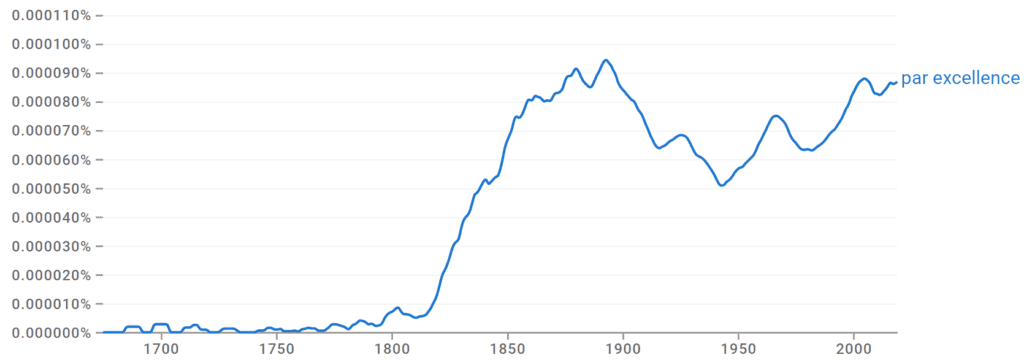
The French term per excellentiam, meaning “by way of excellence,” gave rise to par excellence somewhere in the 16th century. The term came about via the use of par, meaning “through” or “by means of,” and the Latin excellentia, meaning “superiority,” from the mid-14th century.
Par excellence gained popularity in the English Language in the 19th century.
Let’s Review
The English language is highly influenced by other countries, and par excellence is the perfect example of a phrase that has been adapted into the American vernacular. Par excellence means something is of excellence or quintessential and serves as an adjective and adverb.
However, unlike other English modifying phrases, it is placed after the subject it modifies in true French fashion.