


Normality and normalcy are different forms of the same word. Normality is centuries older, though, and many English authorities consider it the superior form, for what that’s worth. Nouns ending in -cy usually come from adjectives ending in -t—for example, pregnancy from pregnant, complacency from complacent, hesitancy from hesitant—while adjectives ending in -l usually take the -ity suffix. Normalcy is unique in flouting this convention.
Normalcy was popularized in the early 20th century thanks to President Warren G. Harding’s “return to normalcy” campaign slogan (though the word did exist before then), and language authorities have been unable to stamp it out.
This ngram graphs the use of normalcy and normality in English-language books published from 1800 to 2000.
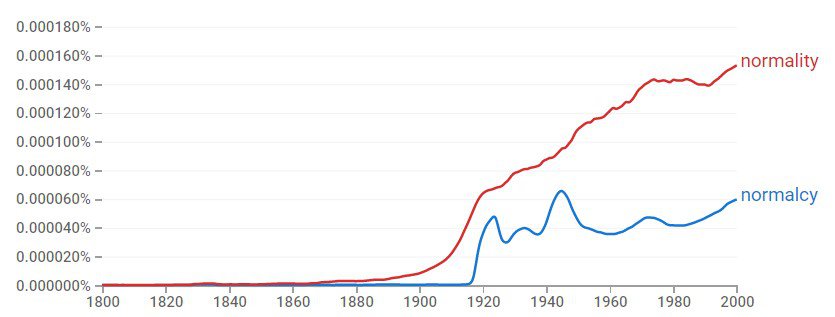
The graph limited to American English is roughly the same. Normalcy is a little less common in the U.K.
Comments are closed.